
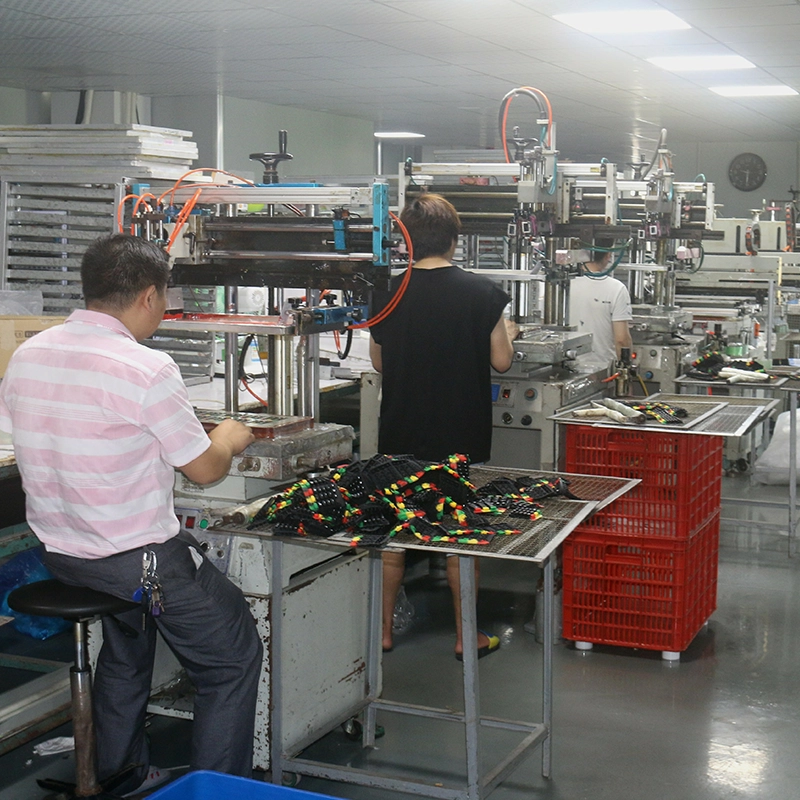
What Is Laser Etching on Silicone Keypads?
Key Benefits of Laser Etching:
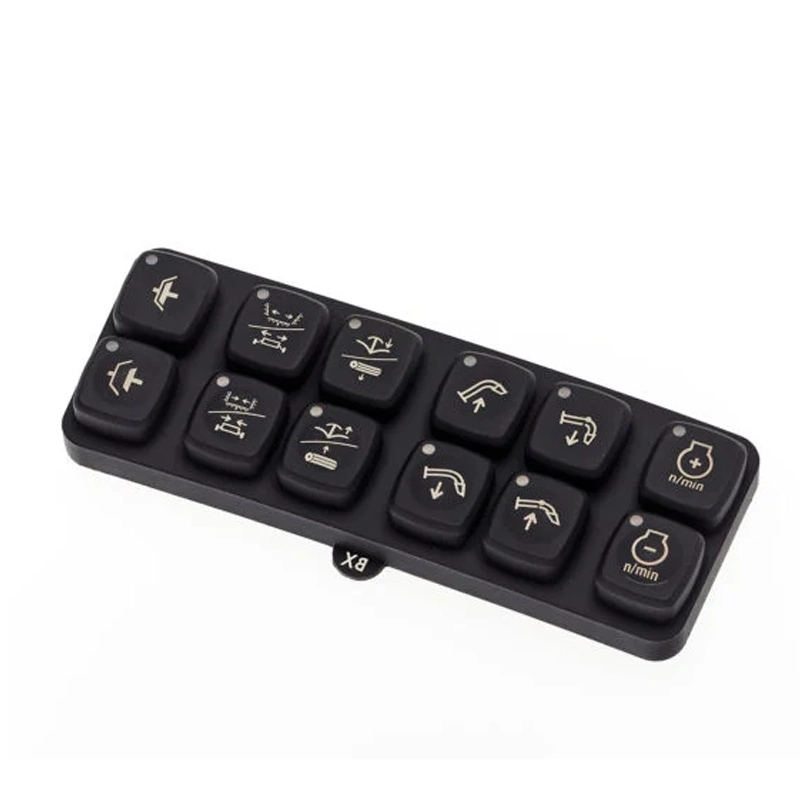
Laser etching uses a focused beam to remove or alter the top surface of silicone legends, creating crisp, permanent marks. Benefits include exceptional durability, high-contrast fine detail, excellent repeatability for low to medium volumes, and compatibility with backlit designs when used with translucent silicone. Because there is no ink layer, laser marks resist abrasion, solvents, and repeated cleaning cycles—ideal for industrial controls, medical devices, and outdoor equipment.
Considerations:
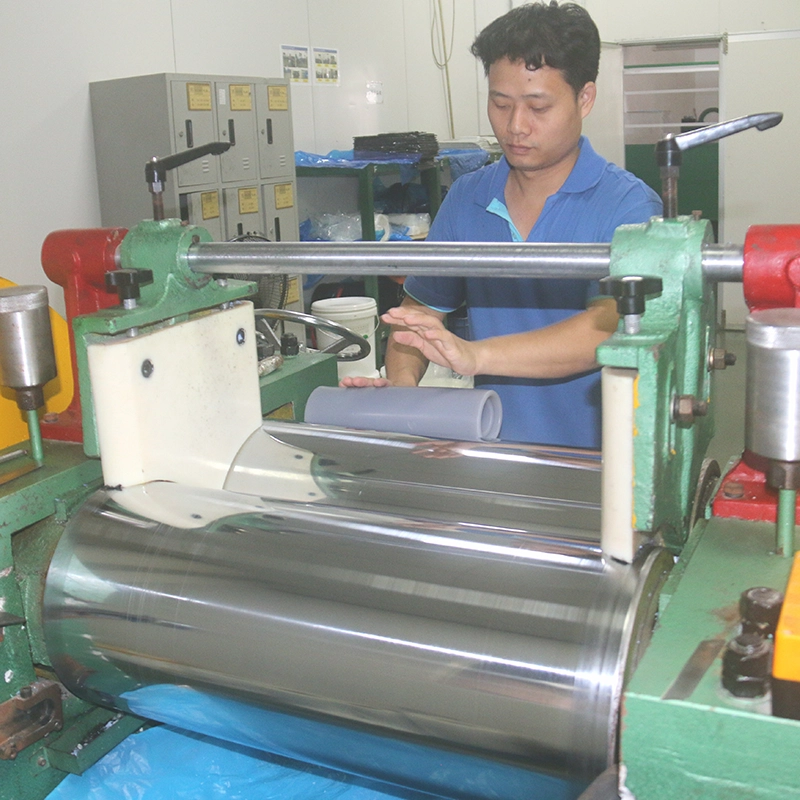
Laser etching can change surface texture and occasionally darken surrounding silicone depending on compound and laser settings. It’s most cost-effective for low-to-medium production runs or high-value applications where longevity matters. Some compound/ink combinations used for multicolor keys may require testing: laser cannot create colors the way inks can, so design expectations must be managed.
Manufacturing Process of Laser Etching Silicone Keypads
- Material validation — verify silicone grade and pigment response to laser exposure.
- Part fixturing — secure molded keypad in a CNC laser station for consistent focus.
- Parameter tuning — optimize power, speed, and pulse to get the desired contrast without degrading silicone.
- Etch execution — raster or vector engraving applied to legends and icons.
- Inspection — verify contrast, edge sharpness, and absence of thermal damage.
- Post-clean — remove any residue; package for shipment.
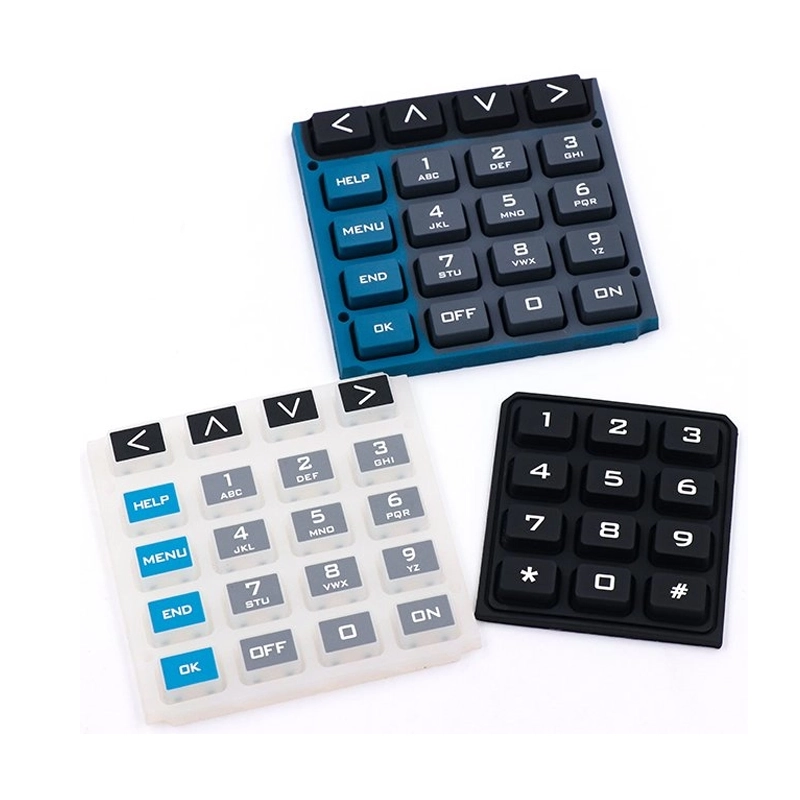
What Is Screen Printing on Silicone Keypads?
Key Benefits of Screen Printing:
Screen printing applies ink layers to the silicone surface, enabling multi-color legends, gradients, and precise branding. It’s highly scalable for larger runs, relatively low-cost per unit at volume, and compatible with various protective coatings (UV, PU) to increase abrasion resistance. Screen printing also supports opaque and fluorescent inks that laser etching cannot produce.
Considerations:
Printed legends are a surface coating and therefore subject to wear over time; their durability depends on ink chemistry and curing. Proper ink selection (silicone-compatible inks or silicone primer systems) and post-cure are critical. Screen printing typically demands larger setup and fixture investment for small runs, but becomes economical as volumes increase.
Manufacturing Process of Screen Printing Silicone Keypads
- Surface preparation — ensure molded silicone is clean and, if needed, plasma-treated for adhesion.
- Stencil setup — configure screen meshes and artwork for each color/pass.
- Ink selection — choose inks formulated for silicone; often require primers or adhesion promoters.
- Registration and printing — align and print successive colors with precise registration.
- Curing — heat or UV cure per ink spec to lock in durability.
- Protective coating (optional) — apply PU or lacquer for extra abrasion resistance.
- Quality check — adhesion, color accuracy, and legibility testing.
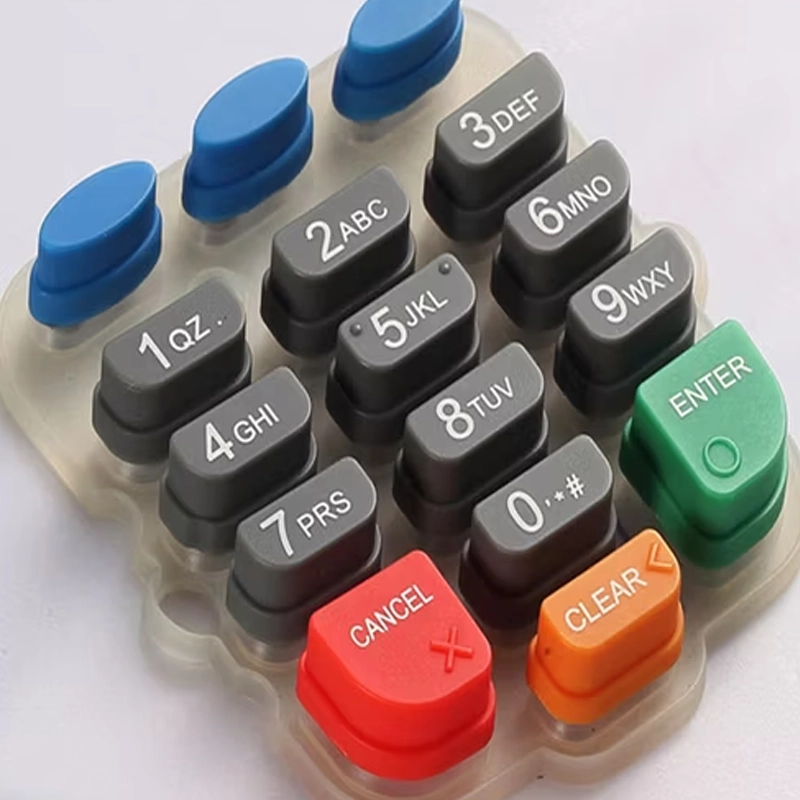
Laser Etching vs. Screen Printing: Side-by-Side Comparison
- Durability: Laser etching wins for lifelong resistance to abrasion and chemicals.
- Aesthetics & Color: Screen printing enables multi-color, opaque, and brand-matched legends.
- Backlighting: Laser etching with translucent silicone is ideal for precise light paths; screen printing requires translucent inks or cutouts.
- Cost & Volume: Laser etching has lower setup for small runs; screen printing scales better for high-volume production.
- Lead Time: Laser etch tooling (digital) is faster to iterate; screen printing requires physical screens and more setup time for multiple colors.
- Application Fit: Laser etching for industrial, medical, and outdoor; screen printing for consumer products where color/branding matter.
Choosing the Right Method for Your Silicone Keypad
1. Is backlighting required?
If you need sharp, defined light paths, laser etching into translucent silicone or through-cut legends is often superior.
2. How durable do the legends need to be?
For heavy-use or sanitizable surfaces, laser etching offers the best longevity. Where moderate wear is acceptable and visual design is a priority, screen printing with a protective PU coat can suffice.
3. What is your budget and order size?
Small, high-value runs favor laser etching; large runs with multiple colors favor screen printing for lower per-unit cost.
4. Do you need complex designs or fine detail?
Laser etching yields micro-detail and thin strokes that can be difficult to reproduce in screen printing without bleed.
Conclusion: Which One Is Better?
There’s no single “better” choice—selection depends on application priorities. For maximum durability, sterilizable surfaces, and precise backlit legends, laser etching is generally preferred. For multi-color branding, aesthetic flexibility, and cost efficiency at scale, screen printing is the practical choice. Many high-quality suppliers combine both methods: screen print for colorful icons and laser etch for wear-prone areas or backlight windows.
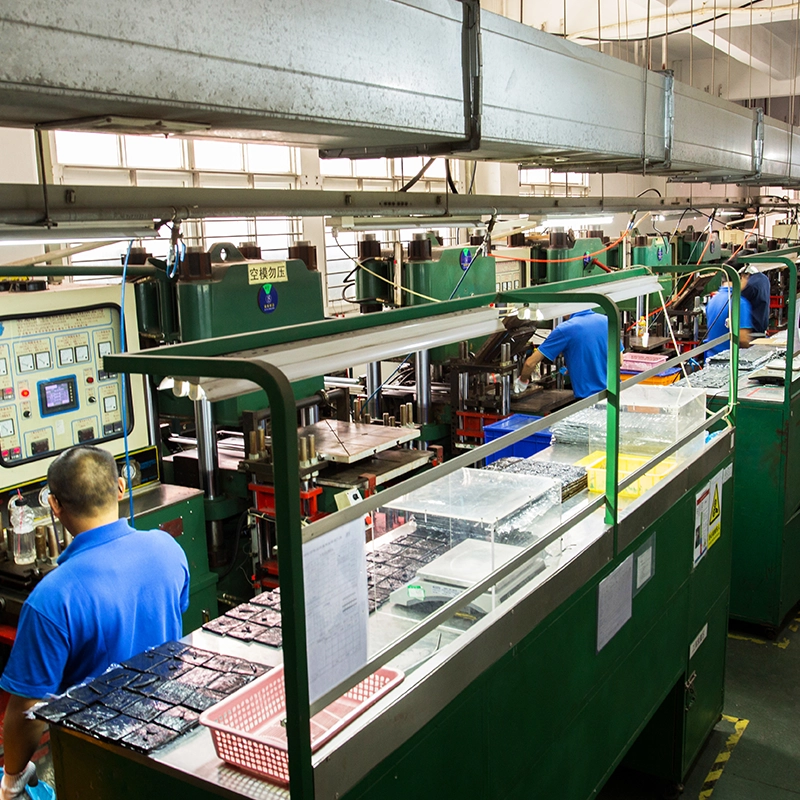
At our factory we tailor production to your product goals—whether you need custom silicone rubber keypads, high-quality silicone buttons, or turnkey manufacturing coordination with trusted suppliers. Tell us your use case, expected volumes, backlighting needs, and durability requirements; we’ll recommend the optimal marking method, provide sample parts, and quote OEM-capable production.