
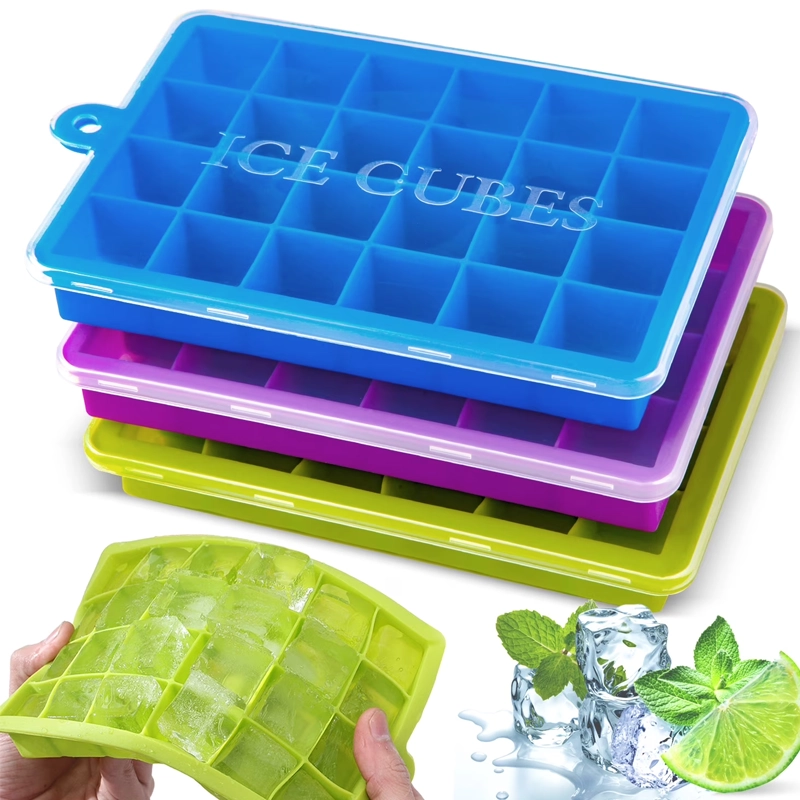
At Siliconebase, a high-quality manufacturing partner and OEM factory, we develop kitchenware and silicone products for global brands. Choosing the right material for ice cube trays affects user safety, product performance, manufacturing cost, and retail positioning. Below we compare the safest options—metal, silicone, and plastic—covering pros and cons from both consumer and B2B (sourcing/manufacturing) perspectives. We also explain why silicone is an excellent material for ice cube trays and how to spec a custom silicone ice cube tray or ice cube mold for OEM production.
What Are The Safest Ice Cube Trays?
Safety for ice cube trays means the material:
- Is certified for food contact (FDA, EU food-contact/LFGB or equivalent)
- Does not leach harmful chemicals (BPA, phthalates, heavy metals)
- Withstands repeated freeze/thaw and cleaning cycles without degrading
- Is easy to sanitize and resists odor or staining
Based on those criteria, stainless steel and high-quality, platinum-cured silicone score highly. Food-grade plastics can be safe if properly specified, but they carry more caveats.
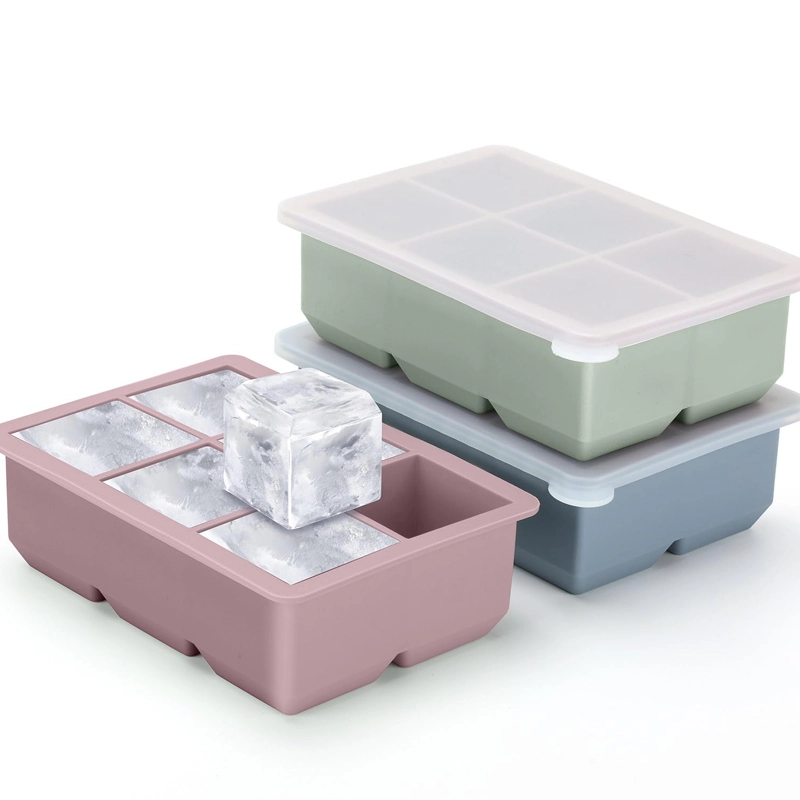
Pros And Cons Of Metal Ice Cube Trays
PROS
Stainless Steel Ice Cube Trays Are Durable & Safe
Stainless steel (304 or 316 grades) is corrosion resistant, inert, and extremely durable—it won’t crack or warp in a freezer and holds up under heavy use.
They Are Environment & User Friendly
Steel is long-lasting and recyclable, making it a sustainable choice for retail positioning.
They Won’t Leach Harmful Chemicals
Unlike some plastics, food-grade stainless steel does not leach organics or softeners into ice.
They Make Clearer Ice
Metal trays can cool water quickly and evenly; depending on fill and freezing technique, they can help form clearer ice than some plastics.
CONS
They Are Expensive
Tooling and material costs for stainless steel forms and rigid frames are higher than plastic or silicone.
Steel Trays Are Bulky
Rigid metal trays are heavier and less convenient for storage or travel applications—limitations for gift and travel SKUs.
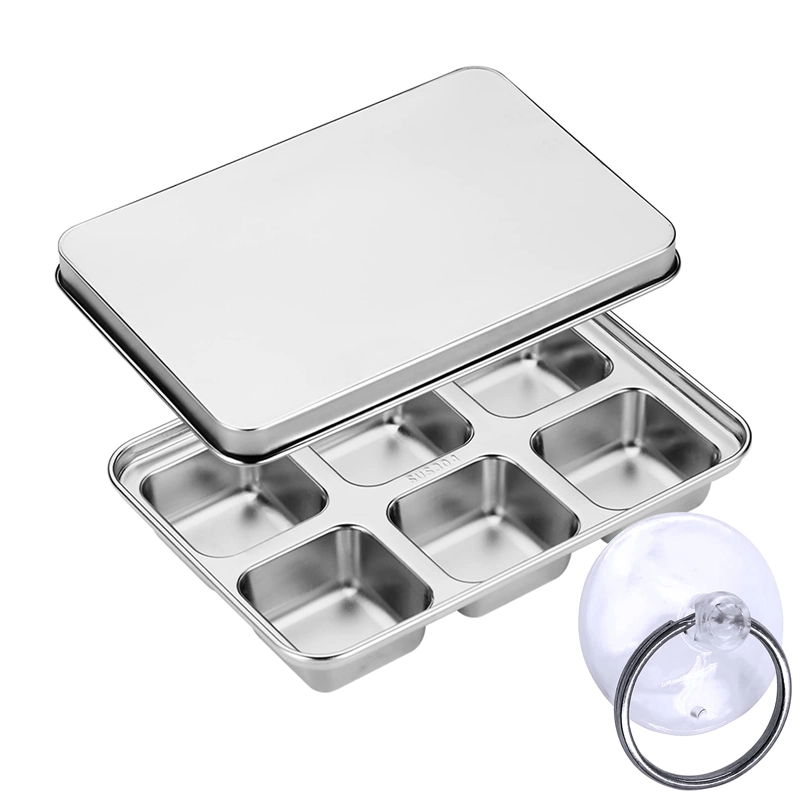
Pros And Cons Of Silicone Ice Cube Trays
PROS
Silicone Trays Come In Different Shapes and Styles
Silicone’s flexibility enables complex cavities—spheres, large whiskey blocks, novelty shapes—that are difficult or impossible with rigid molds.
They Are Very Flexible
Soft, elastic silicone lets consumers pop cubes out easily; collapsible and nestable designs save freezer space.
Silicone Ice Cube Trays Are Safe To Use and Won’t Leach Chemicals
When manufactured from food-grade, platinum-cured silicone and properly processed, silicone is chemically inert, BPA-free, and stable across freezer and dishwasher temperatures—making it a top safety choice.
Important note for B2B buyers: specify platinum-cured LSR or HCR with Certificates of Analysis and migration testing. Siliconebase recommends platinum-cured LSR for best low-extractable performance.
CONS
Ice Cubes In Silicone Molds Might Taste Bad
Low-quality silicone or incomplete curing can trap odors. Proper material selection and post-mold cleaning eliminate this risk.
Silicone Trays Can Gather A White Residue Over Time
Mineral deposits or detergent residues can appear—this is a cleaning/usage issue, not a material failure. Recommend customer care instructions and QC washing in manufacturing.
Ice Is Hard To Get Out Of Some Silicone Ice Cube Trays
Design matters: too-thin walls or deep cavities make removal harder. Good DFM (draft angles, ribbing) resolves this.
Some Silicone Ice Cube Trays Use Cheap Filler Materials Which Can Leach Chemicals
Always require vendor CoAs and raw material traceability; avoid suppliers using inexpensive recycled or filled compounds.
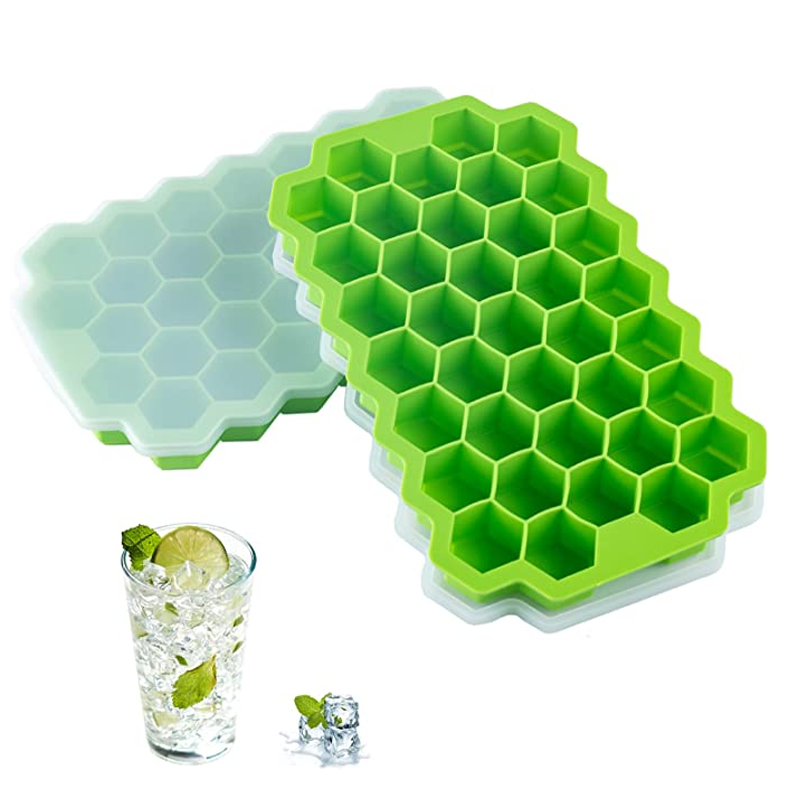
Pros And Cons Of Plastic Ice Cube Trays
PROS
Plastic Ice-cube Trays Are Cheaper
Injection-molded PP or ABS trays have low unit cost at scale and fast cycle times.
Many Plastic Trays Come With a Lid
Rigid trays easily integrate lids and storage bins—attractive to retailers.
Plastic Ice Cube Trays Are Easiest To Use
Rigid trays are familiar: fill, freeze, and invert. For mass-market SKUs this simplicity is an advantage.
CONS
Plastic Trays Can Leach Harmful Chemicals
Avoid unverified plastics. Specify BPA-free, food-grade PP or tested alternatives with migration testing and CoAs.
They Are Not Eco-Friendly
Many consumer plastics are less recyclable and can crack after repeated freeze cycles.
Plastic Trays Can Get Damaged Easily
Lower-grade plastics may separate or deform; they generally lack the lifecycle of metal or high-quality silicone.
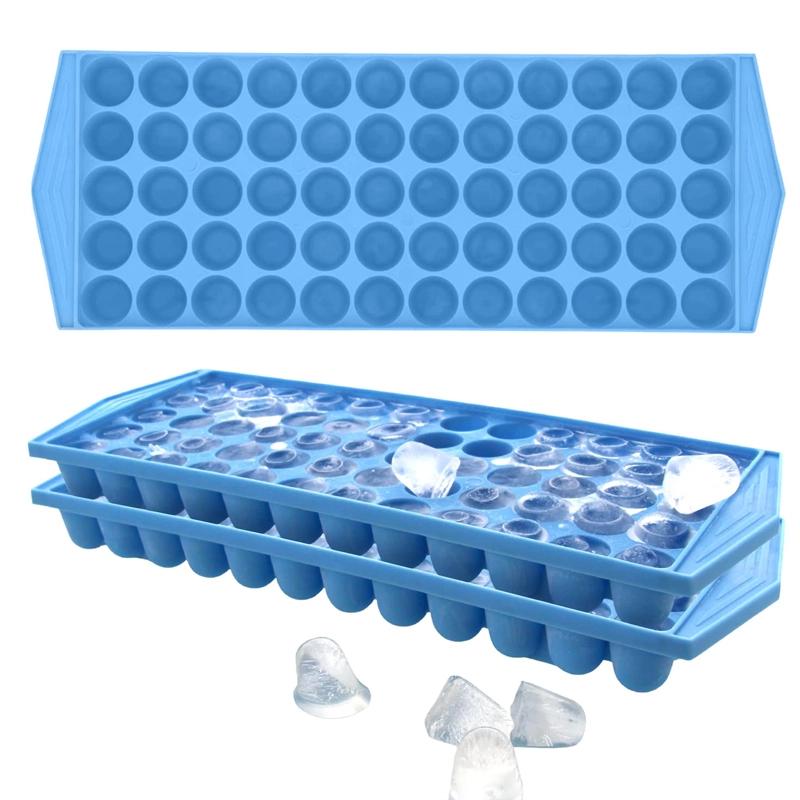
Why Silicone Is a Great Material for Ice Cube Trays (B2B Perspective)
Silicone combines safety, design freedom, and manufacturability when correctly specified and processed:
- Food safety: Platinum-cured LSR meets FDA/LFGB thresholds and shows low extractables.
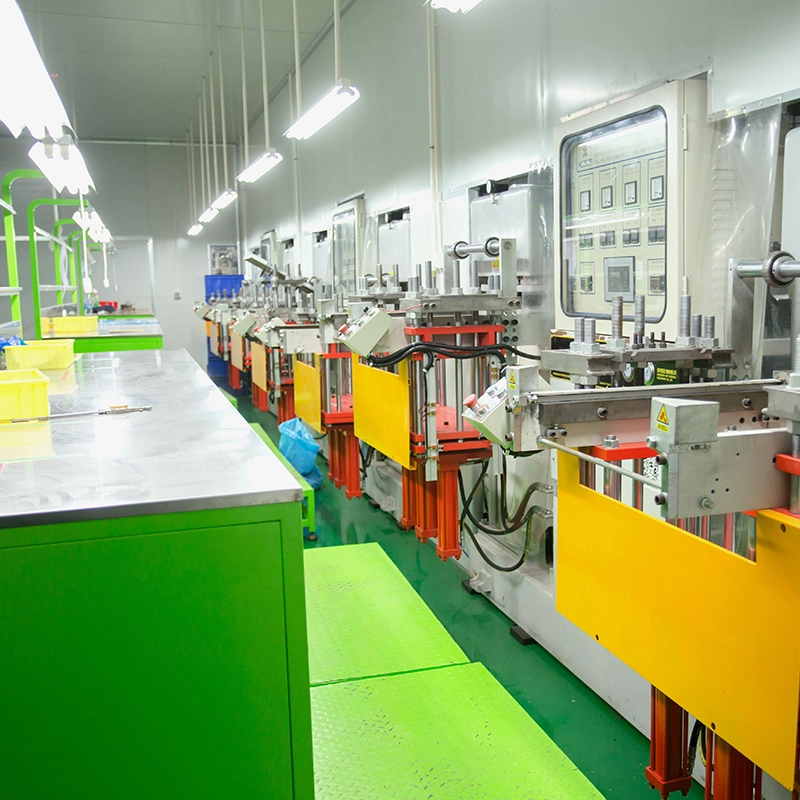
- Manufacturing flexibility: Compression molding or LSR injection produces complex shapes and soft-touch finishes; silicone supports high-detail ice cube mold surfaces.
- Durability & lifecycle: Silicone tolerates thermal cycling and dishwasher sterilization, reducing returns and warranty claims.
- Customization: Easier to execute color matching, multi-cavity designs, and integrated lids for OEM product lines.
For brands seeking premium, differentiated SKUs (travel collapsibles, cocktail spheres, novelty shapes), silicone is frequently the best choice—provided you choose a reputable factory and insist on material testing and QC.
B2B Sourcing & Manufacturing Best Practices
- Specify standards up front: FDA, EU food-contact, RoHS as applicable.
- Request CoAs and migration tests: heavy metals, VOCs, and overall migration.
- DFM early: draft, wall thickness, and rib design prevent warping and improve demolding.
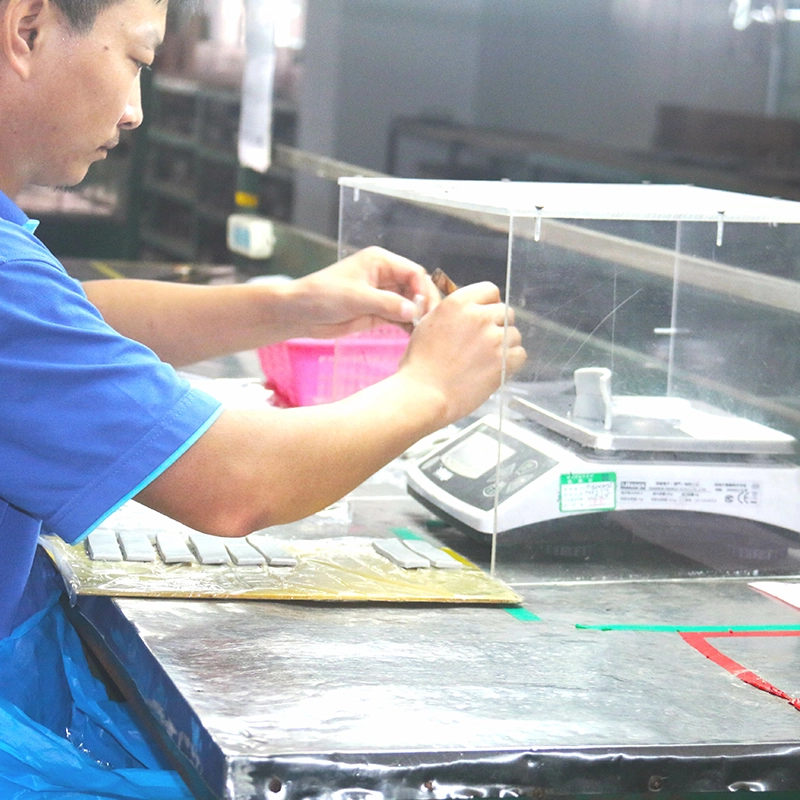
- Pilot run & sensory testing: check for odors, residue, and release performance.
- QC & traceability: batch lots, retained samples, and inspection capture long-term consistency.
Siliconebase offers OEM service, custom tooling, and production controls so clients receive high quality trays and reproducible ice cube molds.
Conclusion
For most premium and specialty ice cube tray products, silicone is an excellent material: safe, flexible, and ideal for complex shapes. Stainless steel is best where extreme durability and zero-leach performance are required; plastics work where cost and rigid lids matter. From a B2B and manufacturing standpoint, the final decision should balance target price, retail positioning, product form factor, and required certifications.
At Siliconebase, our factory delivers end-to-end manufacturing and OEM service for custom silicone ice cube tray projects—tooling, prototyping, migration testing, and mass production with full lot traceability.
Ready to develop a custom silicone ice cube tray or ice cube mold? Contact Siliconebase for a DFM review, sample quote, and compliance documentation. We’ll help you choose the safest material, optimize the mold, and scale to market with confidence.