
Custom Silicone Air Fryer Liners | OEM & ODM Manufacturer for Wholesalers and Distributors
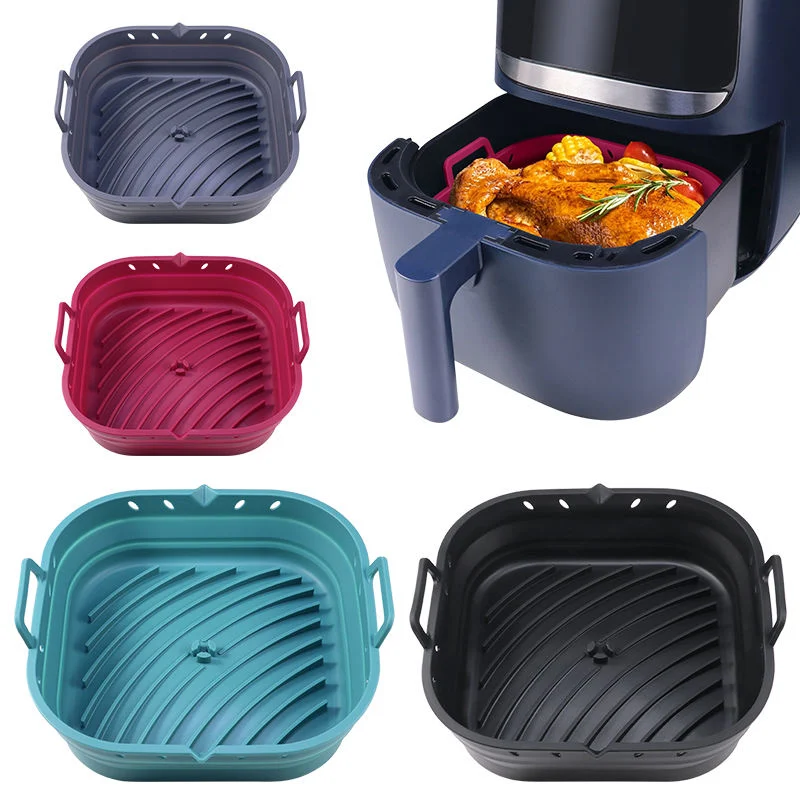
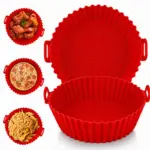
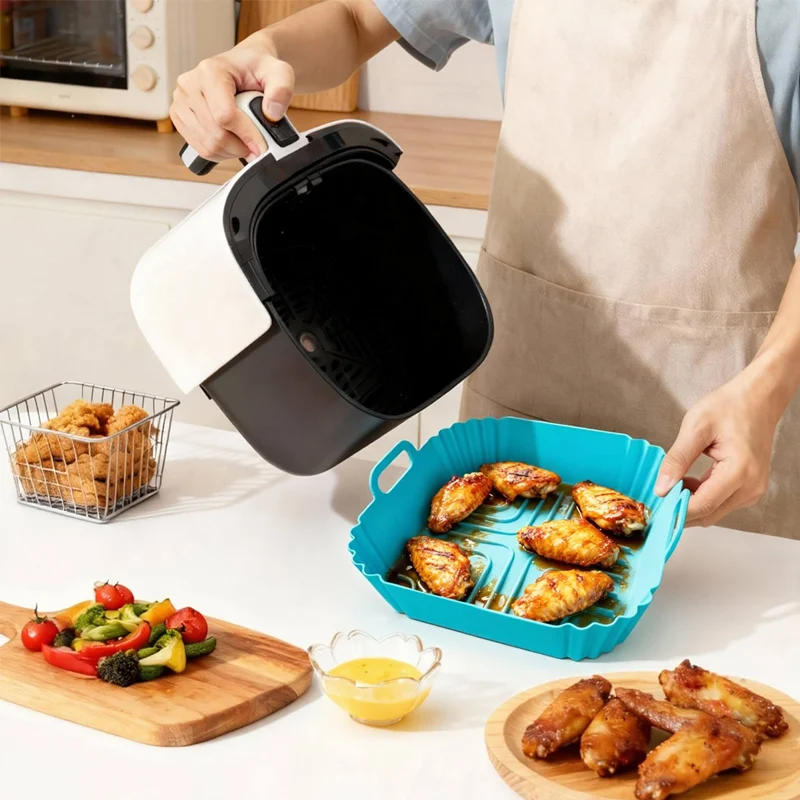
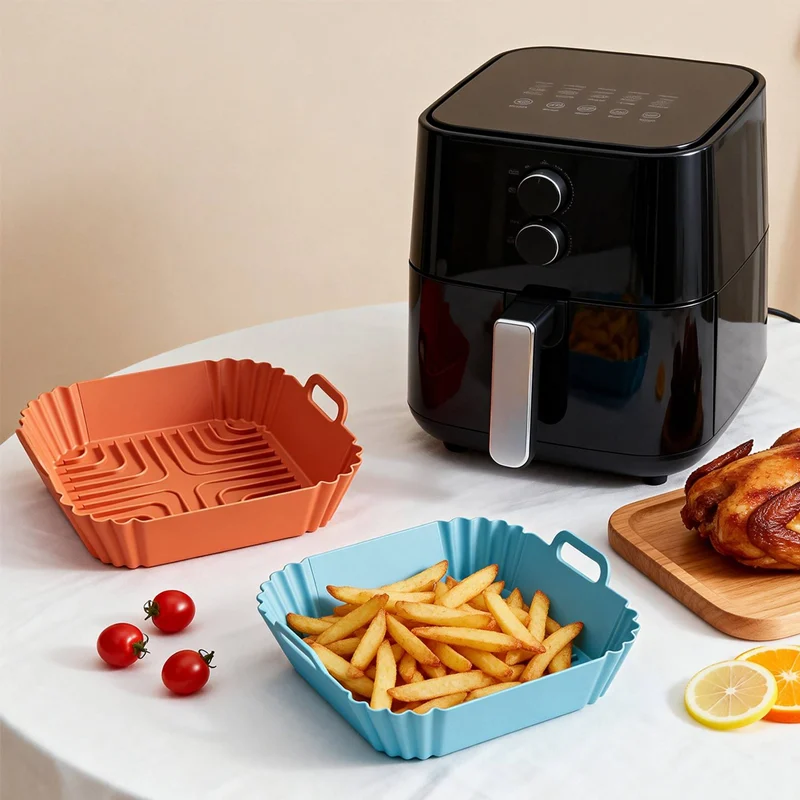
Reusable Silicone Air Fryer Liners provide a flexible alternative to disposable parchment paper liners for air fryer cooking applications. Designed to fit inside compatible air fryer baskets, these silicone inserts create a removable cooking surface that helps collect food residue, grease, and cooking drippings during use.
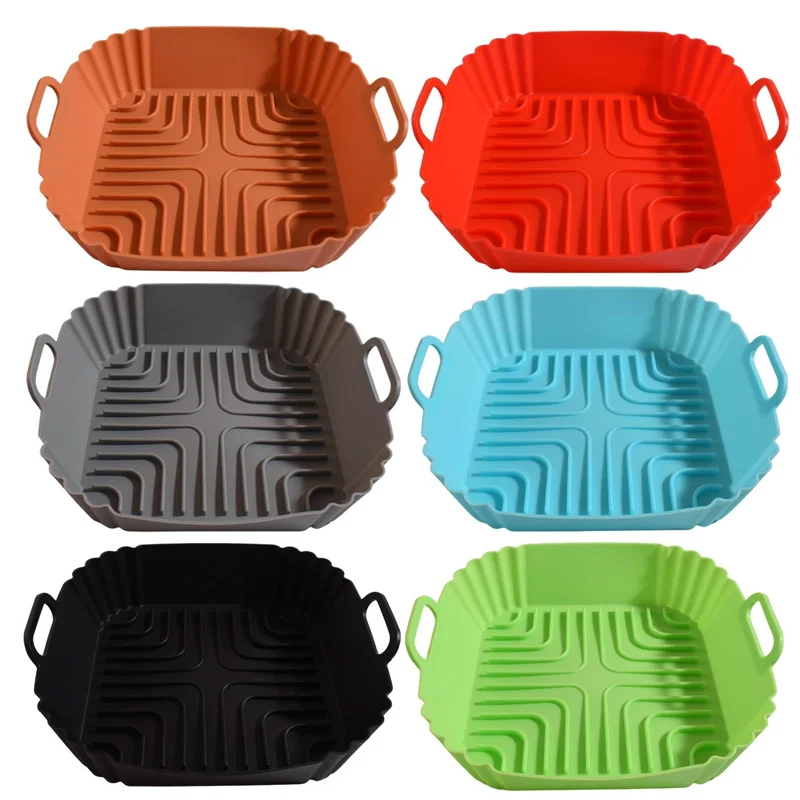
Manufactured from food-grade silicone, the liners feature a flexible structure suitable for repeated use under specified operating conditions. Their dimensions, wall thickness, base construction, surface finish, and overall shape can be developed according to different air fryer basket designs and target market requirements.
For kitchenware brands and wholesale buyers, product consistency is essential when developing reusable air fryer accessories. Variations in silicone thickness, dimensional accuracy, surface quality, and molding stability can affect basket fit, product appearance, and repeat-order performance.
As an OEM silicone kitchenware manufacturer, we support customized silicone air fryer liner production for international brands, importers, distributors, and e-commerce businesses. From product specifications and mold development to surface treatment, logo branding, inspection, and packaging, we help customers develop customized silicone liners for their product portfolios.
Design & Fit Configurations for Custom Silicone Air Fryer Liners
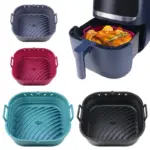
Air fryer compatibility depends on the liner’s overall dimensions and structural design. We support customized configurations to accommodate different basket shapes and cooking appliance requirements.
Shape and Basket Compatibility
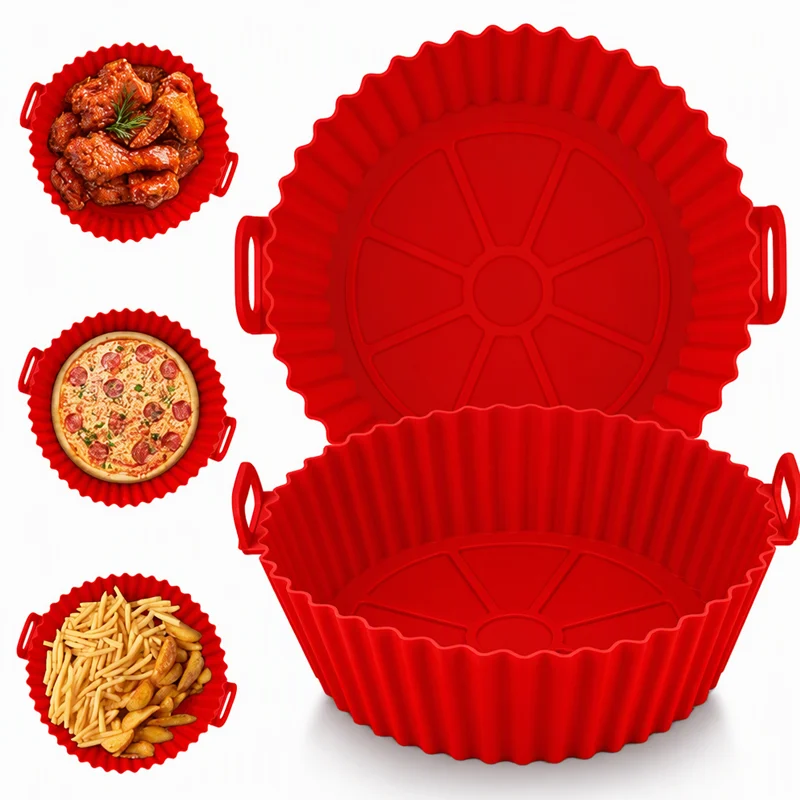
- Round silicone air fryer liners
- Square silicone air fryer liners
- Rectangular silicone basket inserts
- Customized shapes based on customer drawings or samples
Dimensional Development
- Customized length and width
- Customized diameter and height
- Adjustable sidewall dimensions
- Customized bottom and corner structures
Structural Options
- Different sidewall profiles
- Customized base thickness
- Smooth or textured surface designs
- Optional drainage or grease-collection structures, subject to design evaluation
- Customized edge and rim configurations
For OEM projects, we recommend confirming the target basket’s internal dimensions, corner radius, usable depth, and clearance before finalizing the liner design. This helps reduce fit-related issues during sample approval and mass production.
Food Grade Silicone Material & Heat-Resistant Performance
Material selection and molding consistency are important considerations for reusable silicone air fryer accessories. The silicone formulation and finished product should be evaluated against the intended cooking environment and applicable food-contact requirements.
Material Specification
| Item | Specification |
|---|---|
| Main Material | Food Grade Silicone |
| Material Type | Flexible Silicone |
| Surface Treatment | Oil Coating or Customized |
| Thickness | Customized |
| Product Feature | Eco-Friendly, Food Grade |
| Heat Resistance | To Be Defined According to Material Grade and Application |
| Color | Customized |
| Manufacturing Method | Silicone Molding |
Surface Treatment Options
Different surface treatments can be considered according to product positioning and customer requirements.
- Standard silicone surface
- Optional oil coating
- Customized surface texture
- Customized color and appearance
Oil coating can be evaluated as an additional surface treatment during product development. Its adhesion, durability, food-contact suitability, and performance after repeated heating and cleaning should be verified before mass production.
Heat Resistance Evaluation
For heat-resistant silicone air fryer liners, material performance should be assessed against the actual temperature range and cooking conditions specified by the customer.
Key evaluation factors include:
- Thermal stability under the specified operating temperature
- Dimensional stability after repeated heating
- Surface condition after thermal exposure
- Material flexibility after repeated use
- Resistance to cracking, deformation, or surface deterioration
Specific temperature limits and food-contact compliance documentation should be confirmed according to the selected silicone formulation and target market.
Product Development Support
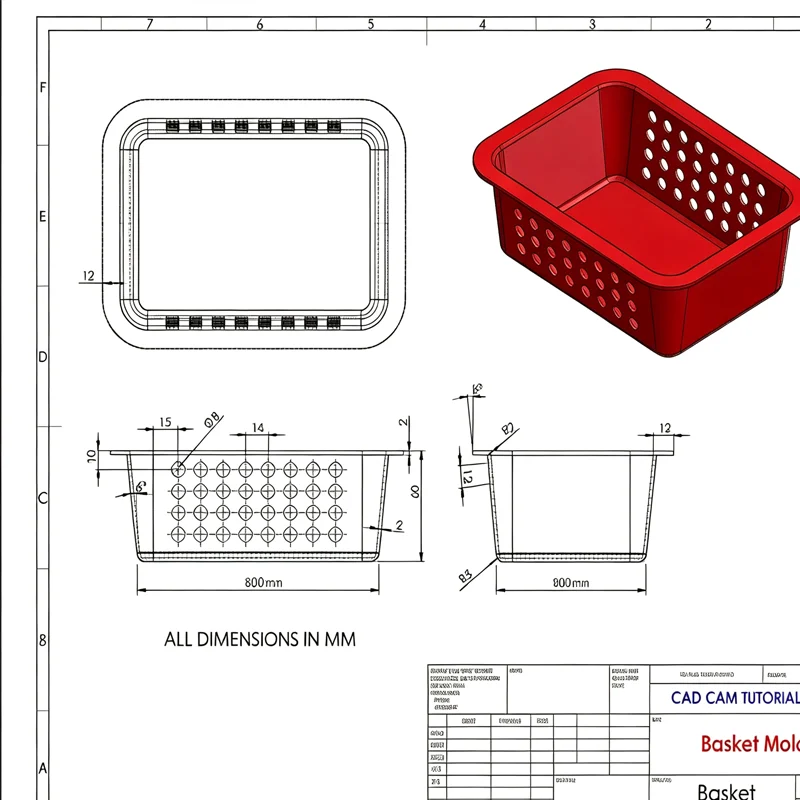
For new product programs, we can work from customer drawings, physical samples, reference products, or initial design specifications.
Development considerations include:
- Product dimensions and basket compatibility
- Silicone material selection
- Wall and bottom thickness requirements
- Surface treatment specifications
- Mold structure and production feasibility
- Logo positioning and packaging requirements
Before mass production, the approved sample and technical specifications should serve as the reference for subsequent manufacturing batches.
Silicone Molding Quality & Production Consistency
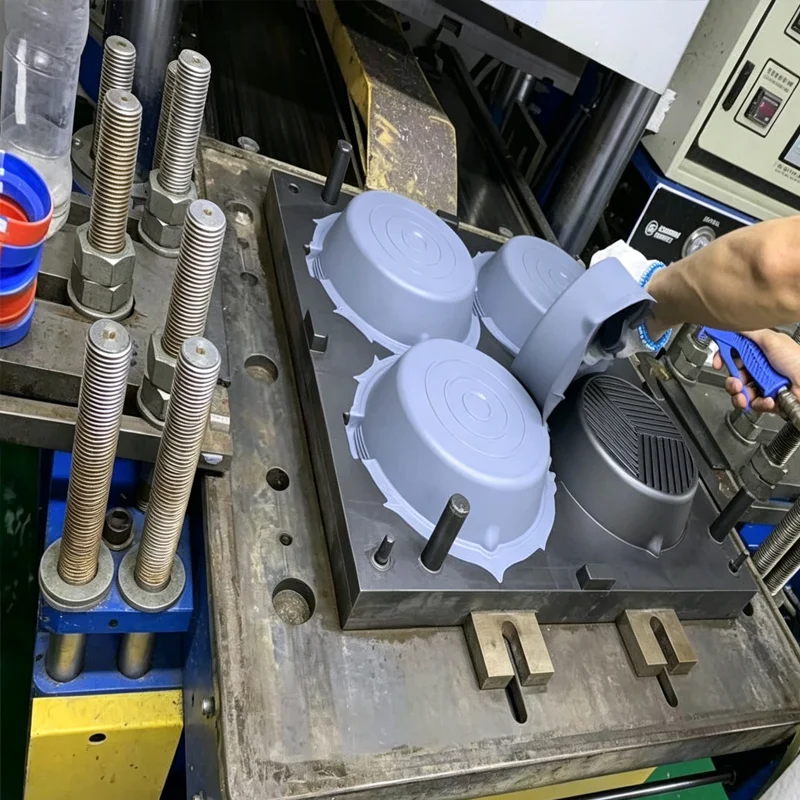
Consistent production is important for brands and distributors managing repeat orders across multiple sales channels. Our silicone manufacturing process focuses on material control, mold stability, dimensional consistency, and finished-product inspection.
Key Production Considerations
1. Material Preparation
Silicone raw materials are prepared according to the approved material specification, color requirements, and production formulation.
2. Mold Development
Mold design and manufacturing are evaluated according to product geometry, wall thickness, structural details, and dimensional requirements.
3. Silicone Molding
The silicone material is processed using the corresponding molding method. Molding conditions are controlled to support consistent product formation.
4. Trimming & Surface Finishing
Excess material and molding flash are removed, followed by visual inspection of edges, surfaces, and structural details.
5. Product Inspection
Finished liners are checked against approved samples and specifications for dimensions, appearance, surface condition, and other agreed acceptance criteria.
6. Packing Preparation
Approved products undergo final quantity and packaging checks before bulk shipment.
Batch Consistency Focus
For repeat OEM orders, important control points include silicone material consistency, dimensional tolerances, wall thickness, color uniformity, molding defects, and surface treatment stability.
Custom Silicone Air Fryer Liners for Kitchenware Product Portfolios
Reusable silicone air fryer liners can be developed for different kitchenware product categories and commercial distribution channels.
Typical applications include:
- Kitchenware and cookware brand product lines
- Air fryer accessory collections
- Reusable cooking accessory ranges
- Household kitchen supply distribution
- Supermarket and retail kitchenware programs
- E-commerce private-label product collections
- Promotional kitchen accessory sets
- Wholesale and import distribution
For customers developing multiple air fryer accessory SKUs, customized shapes, dimensions, colors, and packaging can help establish a consistent product range across different basket configurations.
FAQs
Q1. What information should we provide to receive an accurate OEM quotation for silicone air fryer liners?
To prepare a meaningful quotation, we recommend providing the product shape, overall dimensions, wall and bottom thickness, silicone material requirements, surface treatment, estimated order quantity, and packaging specifications. Reference samples, technical drawings, or basket measurements are also helpful. These details allow us to evaluate material consumption, mold requirements, production feasibility, and unit pricing more accurately.
Q2. Can you manufacture silicone air fryer liners compatible with different basket sizes and shapes?
Yes. We support customized round, square, rectangular, and other product configurations. Customers can provide the target basket’s internal dimensions, reference samples, or technical drawings. We can evaluate the required liner dimensions and structure before sample development. Compatibility should be confirmed through physical fitting tests using the intended air fryer basket.
Q3. What food-contact documents and heat-resistance test reports can you provide for bulk orders?
Available documentation depends on the selected silicone material, formulation, and destination market. Please specify your required food-contact regulations, testing standards, and temperature range when submitting your inquiry. Material declarations, relevant compliance documents, and test reports should be confirmed before order approval. We recommend evaluating the finished product rather than relying solely on raw material specifications.
Q4. Can the silicone formulation, thickness, and oil coating be adjusted for different product positioning?
Yes. Material specifications, wall thickness, bottom thickness, and surface treatment can be discussed during OEM development. Oil coating is available as an optional or customized surface treatment, subject to technical and food-contact suitability evaluation. The final specification should be validated through samples and agreed performance testing before production.
Q5. What is your MOQ for customized silicone air fryer liners, and how do mold costs affect the quotation?
MOQ depends on the product design, dimensions, material consumption, mold configuration, and production requirements. For new designs, mold development costs may be quoted separately from the unit production price. Existing mold availability, tooling complexity, and the expected order volume can also influence the overall project cost. We recommend requesting a quotation based on your target annual volume as well as the initial order quantity.
Q6. How do you control product consistency for repeat orders and private-label retail programs?
For repeat orders, the approved sample, material specification, product dimensions, color reference, surface treatment, and packaging requirements should be maintained as production standards. Inspection can cover dimensional accuracy, thickness consistency, surface defects, molding quality, and agreed performance requirements. For private-label programs, we can also coordinate customized logos, product labels, retail packaging, and carton specifications to support consistent presentation across shipments.