
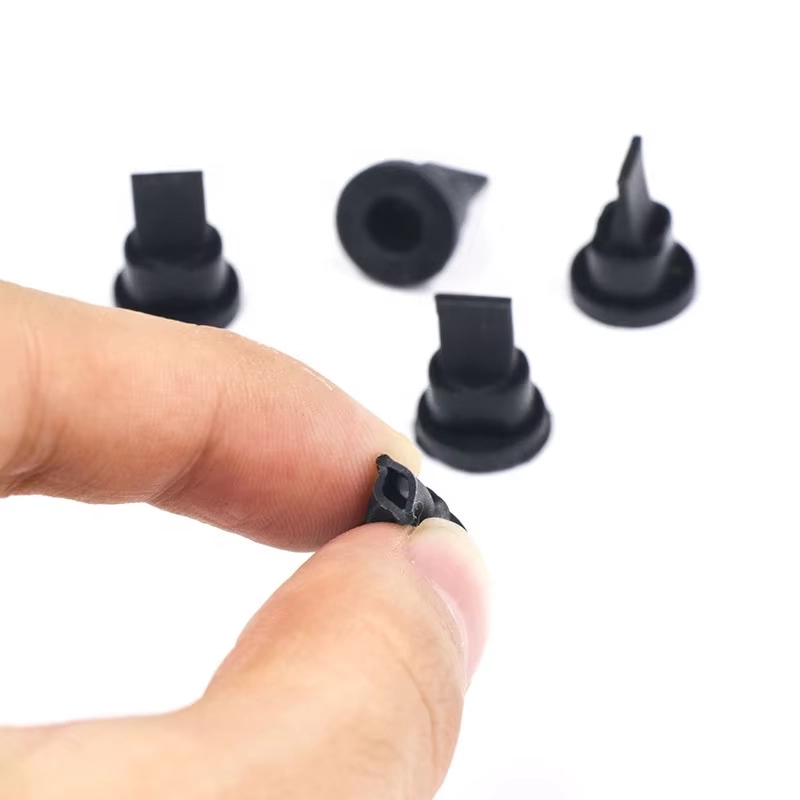
If you’re evaluating one-way valve options for a medical device, pump, consumer dispenser, or microfluidic cartridge, understanding duckbill valves (also called duckbill one-way valves, duckbill check valves, or elastomeric duckbill valves) is essential. At Siliconebase we design and produce custom Silicone Duckbill Valves using precision silicone injection molding, and this guide walks engineers and procurement teams through how these valves work, what controls their sealing performance, design best practices, material choices, and typical applications.
What Is a Silicone Duckbill Valve?
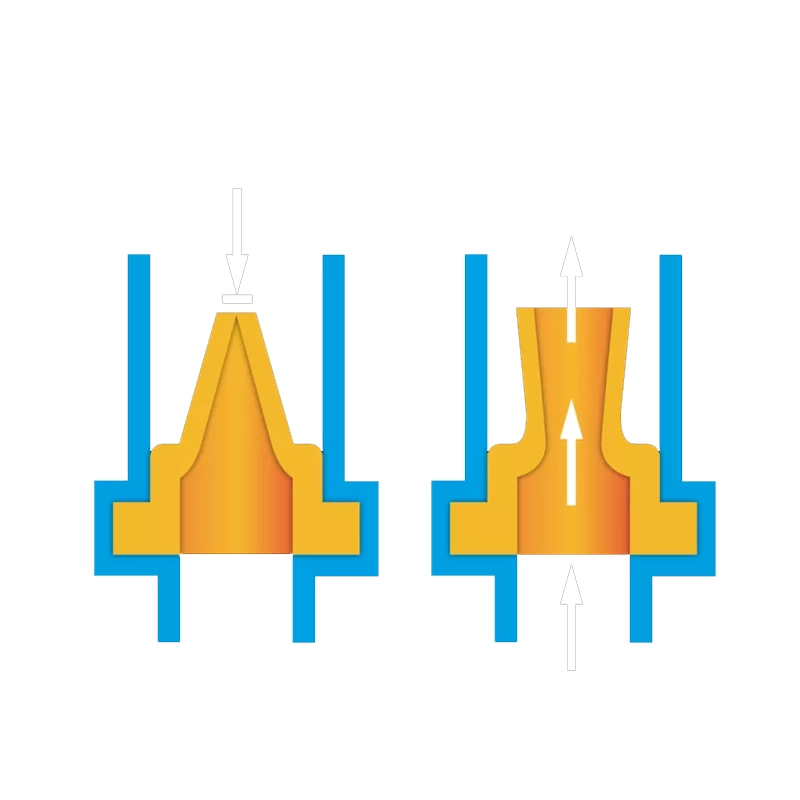
A silicone duckbill valve is a simple, single-piece elastomeric valve whose outlet resembles a duck’s beak: two tapered lips that open under forward pressure and reclose to prevent backflow when pressure stops or reverses. The geometry is minimalistic — a flexible tube or nozzle with a slit at the tip — but that simplicity yields excellent performance for low-pressure and contamination-sensitive systems because there are no metal springs or moving parts.
Duckbill valves are produced as discrete molded parts (pop-in cartridges) or overmolded into assemblies. They’re widely used as disposable or durable one-way valves in medical, food, and consumer applications.
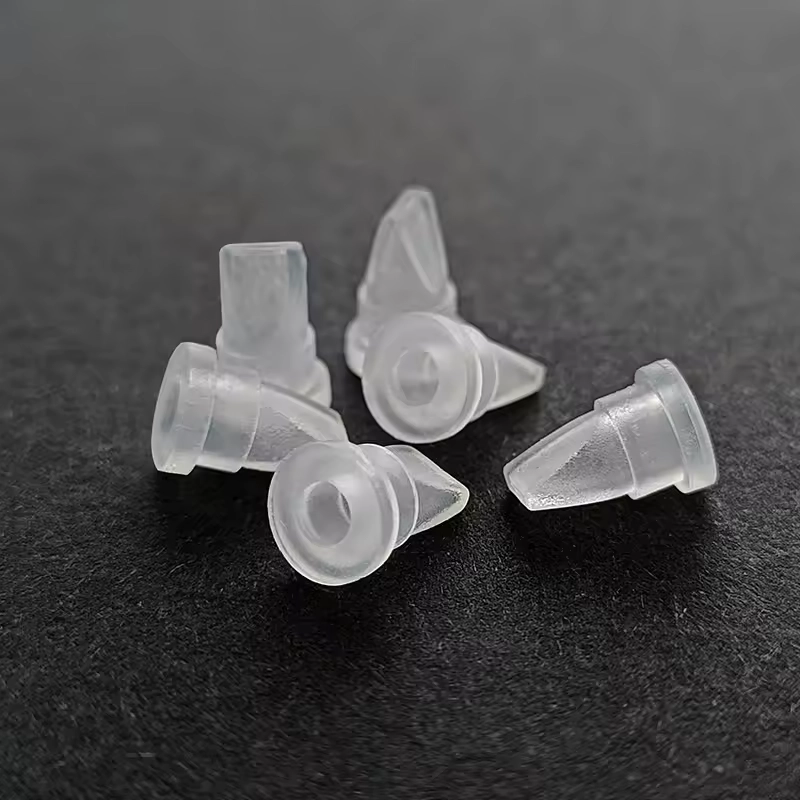
Duckbill Valve Sealing Effect Mainly Depends On
- Lip Geometry and Slit Profile
The slit length, taper, and lip thickness define how the valve opens (cracking pressure) and how it re-seats. A fine, evenly radiused slit delivers repeatable low cracking pressure and clean reseal. - Material Elasticity and Compression Set
Shore hardness, elongation, and compression-set characteristics determine how quickly and completely the lips recover after deformation. Low compression set (good elastic recovery) preserves sealing over many cycles. - Seat and Mating Surface Design
How the duckbill seats against its housing — groove dimensions, lead-in chamfers, and sealing radius — affects seat conformity and leak-tightness. A well-matched seat spreads the sealing load and prevents edge inversion. - Manufacturing Precision
Molding consistency (slit location, wall thickness, surface finish) is critical. Automated silicone injection molding with AOI and SPC ensures each valve meets dimensional and performance specs. - Operating Conditions
Temperature, chemical exposure (solvents, oils), and particulate load can alter material behavior and sealing. Correct compound selection and filtration upstream are essential.
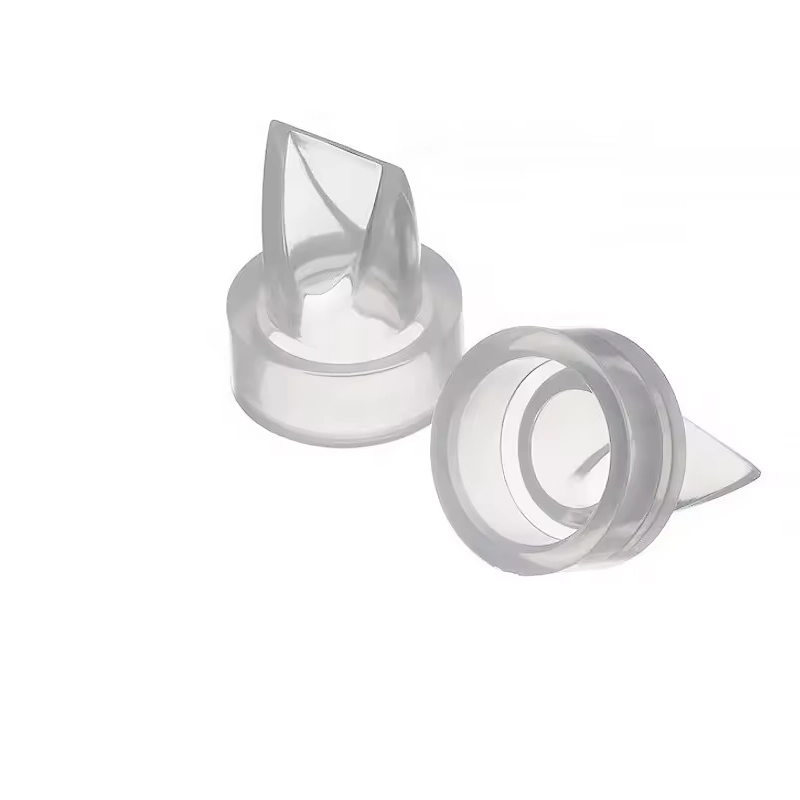
When Designing Duckbill Valves, Pay Attention To
- Target Cracking Pressure: Define the exact opening pressure range (e.g., 0.2–2 psi). Tolerances should reflect your system’s operational window.
- Wall Thickness & Transition Radii: Avoid abrupt thickness changes that cause stress concentrations and inconsistent slit behavior.
- Lip Symmetry and Finish: Ensure symmetric, polished lip edges for lowest leakage and minimal particulate generation.
- Mounting & Retention Features: Add ribs, snap-fit bosses, or flange geometry so the valve seats reliably and is easy to install or overmold.
- Cycle Life Requirements: Specify expected actuation cycles and validate with life testing; adjust material durometer and geometry accordingly.
- Fluid Compatibility: Test with real fluids — saline, oils, detergents, or reagents — to check swelling, softening, or embrittlement.
- Sterilization & Cleanroom Needs: For medical parts, design for autoclave or gamma sterilization and produce in controlled environments.
- Manufacturability: Optimize for LSR tooling (flow, venting, gate location) to minimize flash and ensure repeatable slit formation.
What Material Do We Use for Duckbill Valves?
- Platinum-cured Liquid Silicone Rubber (LSR / VMQ): The most common choice for medical and food-contact valves because it’s biocompatible, thermally stable (−60°C to +200°C), and resists many sterilization cycles.
- Fluorosilicone (FVMQ): Used when hydrocarbon or fuel resistance is necessary; combines silicone elasticity with improved oil resistance.
- EPDM or Nitrile (NBR): Occasionally used in industrial valves where cost or specific chemical resistance favors these rubbers, but they have narrower temperature ranges and different compression-set behavior.
- Specialty Compounds: Low-extractable LSR grades for sensitive analytical systems, or medical-grade grades with certified biocompatibility and traceable CoAs.
Material selection should always be validated with compatibility and aging tests using the actual media and sterilization methods of your application.

Applications of Duckbill Valves
- Medical & Life Sciences: One-way patient valves, resuscitator circuits, disposable sampling cartridges and infusion check valves.
- Consumer & Personal Care: Leak-proof squeeze bottles, travel dispensers, and cosmetic dosing valves.
- Microfluidics & Analytical Devices: Directional flow elements in micro-pumps and reagent cartridges where low dead volume and zero-leak performance are required.
- Portable & Battery-Powered Devices: Small pumps and air delivery systems benefit from the valve’s low cracking pressure and silent operation.
- Industrial: Low-pressure venting and drain valves in pumps and small-scale fluid handling systems.

Conclusion
Silicone duckbill valves are elegant, cost-effective, and reliable one-way valves when engineered correctly. Their sealing performance is driven by geometry, material properties, mating-seat design, and manufacturing precision. At Siliconebase we combine design-for-manufacture, medical- and food-grade material expertise, and high-precision silicone injection molding to deliver custom duckbill solutions for OEMs and suppliers. Whether you need a pop-in duckbill cartridge, an overmolded valve seat, or a fully validated part for a regulated market, we can help.
Ready to develop a custom Silicone Duckbill Valve or audit a current design? Send your drawing, target cracking pressure, operating fluids, and annual volumes to Siliconebase — our engineering team will provide DFM feedback, prototype options, and a production plan.